 I’ve talked before on this blog about yoga and pain, considering both the ways that pain can be eased into through yoga, and how I relate my practice to dietary choices and having rheumatoid arthritis. In recent weeks, it’s been on my mind again, as I deal with some medical issues and all of the attendant doctor visits, tests, fretting, etc. and the physical symptoms as well. The more I practice, and the more I think about it, the more convinced I am that yoga is not only appropriate for individuals with chronic autoimmune disease, but extremely beneficial and maybe even necessary. In this post, I consider five primary reasons for this viewpoint.
First, yoga is a practice that can be completely adapted to individual ability and need. Weight, fitness level, agility, flexibility, medical concerns, and so on – all are extraneous to the ability to do yoga. There is a practice that will work for everyone, whether an asana practice, a pranayama practice, meditation, devotion, or some combination of these. This is important for individuals dealing with chronic autoimmune conditions, as the abilities and needs of the body can vary widely due to such conditions, and change from day to day.
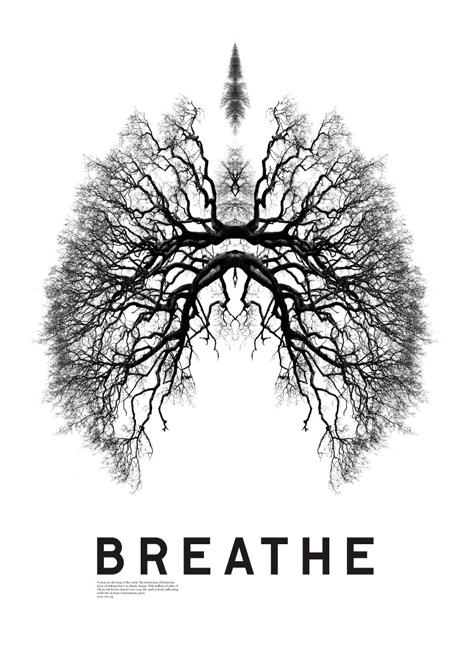
Whether a pranayama or asana practice, and regardless of the level of intensity, yoga can aid in strengthening the body. This includes encouraging and supporting lung capacity, building muscle, increasing muscle elasticity, decreasing stiffness of fascia, and aiding in joint mobility. Because many chronic autoimmune disease conditions affect these elements of the body, yoga can actually work to reduce or assist in management of physical effects. In the case of rheumatoid arthritis, while yoga may not reduce the underlying inflammatory response that creates the joint problems, the strengthened muscles around joints and enhanced synovial circulation can ease the symptoms.
Dealing with chronic disease can be stressful; it is “dis-ease,” after all. When attempting to manage the merry-go-round of medical visits, decisions, medications, and physical issues, it’s very easy to have the mind head (haha!) into a frenzied spiral of vrtti that just won’t slow down. Questioning and reviewing the past (What did I do to cause this? Do I feel better or worse today than yesterday? Do I usually have this sensation in both legs equally or more one than the other?) is not only a common outcome but also a required part of answering the questions raised by caregivers. Planning ahead may also be needed (Ok, if I’m going to go to the mall later, I need to lay down for a while now), but can pretty quickly drift into an ongoing series of “if-then” thoughts about the future that can be scary and likely serve no purpose. As one of the purposes and definitions of yoga is the control or stilling of the fluctuations of the mind, it can be extremely helpful for someone managing a long-term condition.
As I discussed in a prior post, I believe that yoga can alter the individual’s relationship with pain. We are conditioned to view pain as a sign of danger and to flinch (mentally or physically) away from it. That’s fine, but when an individual has chronic pain, there may be nowhere to go that the pain isn’t present. If all pain activates the fight or flight response, and pain is constant, it can be very detrimental physically and mentally for the individual (and for those around him/her). In a yoga practice, we are encouraged to really focus on the body sensations in a way that helps us to see the difference between full pain and discomfort, and to distinguish between the kind of pain that indicates damage being done and the kind that is just a feature of the pose. Such understandings and reactions to pain can then be brought into the rest of life for the individual with chronic pain and help him/her to more quickly distinguish between the sort of pain that must immediately be attended to and calls for fight or flight and the kind that can be breathed through or relaxed into and then becomes more manageable.
Finally, and not finally because it’s least important, yoga provides a place to really “be.” Given all of the issues discussed above, it’s awfully easy with a chronic medical condition to feel like you are never really in the place you are. The mind is either spinning here and there planning, rehashing, and diagnosing, or the body is attempting to run or fight. A yoga practice encourages us to be mindful – to be in the moment that we are in, fully experiencing that moment and all that it is. That’s a lovely thing, even when part of that experience is discomfort. In a 90-minute practice last night, even though I have been having a lot of discomfort this week, I spent probably 82 minutes really on my mat. I wasn’t thinking about medical tests or diagnoses; I wasn’t planning the future full of what-ifs; I wasn’t craving sleep as a way to escape from the pain; I wasn’t feeling angry about the situation or negatively assessing my uncooperative body. I was just doing yoga, listening to my instructor, breathing, flowing in and out of poses, moving my body. It was so good and felt like such a blessing.
For all of these reasons, I would argue that people with chronic autoimmune disease should embrace, not avoid, yoga as a practice and way of being in the world. I can say with certainty that it has been good for me.
Namaste,
L